Walk into any digital marketing agency in Kochi right now and ask the hiring manager what they’re struggling to find. They won’t say ‘someone who knows Instagram’. They won’t say ‘someone who can write captions’.
They’ll say: ‘We need someone who can run paid ads and actually show results.’
That person is a performance marketer. And right now in Kerala, they are among the highest-paid entry-level hires in the entire digital marketing industry.
So what exactly is performance marketing? Why does it pay more? And what does it actually involve day-to-day? If you’ve been trying to figure out which area of digital marketing to specialise in — this blog is going to help you decide.
Performance marketing is a category of
digital marketing where every rupee you spend is tied to a measurable result. You’re not paying for visibility, awareness, or reach in a vague sense. You’re paying for specific outcomes — clicks, leads, purchases, sign-ups, app installs — and you can track exactly what each outcome cost you.
The two biggest channels in performance marketing are:
- Google Ads — ads that appear when someone searches for something on Google. If someone types ‘digital marketing course in Kochi’, a Google Search ad can appear at the top of the results. You pay only when someone clicks.
- Meta Ads — ads that run on Facebook and Instagram. These are interest-based and behaviour-based, meaning you show ads to people who match a profile you define — age, location, interests, past behaviour online.
Both platforms have become extraordinarily sophisticated. They use machine learning to find the right people, at the right time, with the right message. The performance marketer’s job is to set up, manage, and continuously optimize these campaigns so that the business gets the most value from every rupee spent.
Performance marketing is the part of digital marketing where your work shows up directly in a business’s revenue. That’s why it’s valued — and why it pays more.
How is it different from ‘general’ digital marketing?
This is the question most students don’t think to ask. They hear ‘digital marketing’ and assume it’s one thing. It isn’t.
Think of it this way. Digital marketing is a broad field that includes:
- Content marketing — writing blogs, making videos, creating resources that attract audiences over time
- SEO — optimising websites and content so they rank higher on Google search results organically
- Social media management — creating and posting content on platforms to build brand presence
- Email marketing — sending campaigns to subscriber lists to nurture and convert leads
- Performance marketing — running paid campaigns on Google, Meta, and other platforms tied directly to measurable results
All of these are legitimate skills. But performance marketing is different in one fundamental way: the results are immediately measurable in numbers. You spent ₹50,000 on ads. You got 200 leads. Each lead cost you ₹250. Of those 200, 20 became customers. Each customer cost you ₹2,500 to acquire.
That clarity is exactly what businesses want. And the person who can deliver and improve those numbers is the person they’re willing to pay more for.
The salary difference is real and significant. It reflects the fact that performance marketers directly influence revenue — and businesses know it.
Performance marketing has its own vocabulary. Once you understand these terms, the whole field starts making sense. Don’t let the jargon intimidate you — each concept is straightforward once it’s explained clearly.
ROAS — Return on Ad Spend
This is the most important number in performance marketing. ROAS tells you how much revenue you earned for every rupee you spent on ads.
If you spent ₹10,000 on a Google Ads campaign and it generated ₹40,000 in sales, your ROAS is 4. For every ₹1 you spent, you got ₹4 back. A ROAS above 3 is generally considered healthy, though this varies by industry.
As a performance marketer, your job is to push this number up. If ROAS is low, the campaign is losing money. If it’s high, you scale the budget and grow the business faster.
CPC — Cost Per Click
Every time someone clicks on your ad, you pay a cost. It is the average amount you pay per click. If your ad gets 100 clicks and you spent ₹5,000, your CPC is ₹50.
Lower CPC is usually better, but not always. A ₹300 click that converts into a ₹10,000 purchase is far more valuable than a ₹20 click that leads to nothing. It only matters in context of what happens after the click.
CTR — Click-Through Rate
Of all the people who saw your ad, what percentage actually clicked on it? If 1,000 people saw your ad and 30 clicked, your CTR is 3%. A high CTR means your ad creative and copy are relevant and compelling to your target audience. A low CTR usually means your ad is being shown to the wrong people, or the message isn’t landing.
CPL — Cost Per Lead
For businesses that don’t sell directly online but want people to fill in a form or make an inquiry coaching institutes, real estate companies, hospitals, travel agencies, CPL is the key metric. If you spent ₹20,000 and got 80 leads, your CPL is ₹250.
For a digital marketing course like Zeon, where a student enquiry has high value, a CPL of ₹300–500 can be very profitable if the admission conversion rate is strong.
Conversion Rate
Out of everyone who clicked your ad and visited your landing page, what percentage took the action you wanted filling a form, making a purchase, calling you? If 200 people visited and 10 enquired, your conversion rate is 5%.
This is where performance marketers spend a lot of time. You can have a brilliant ad, but if the landing page is confusing or slow, conversions suffer. The marketer has to think beyond the ad itself.
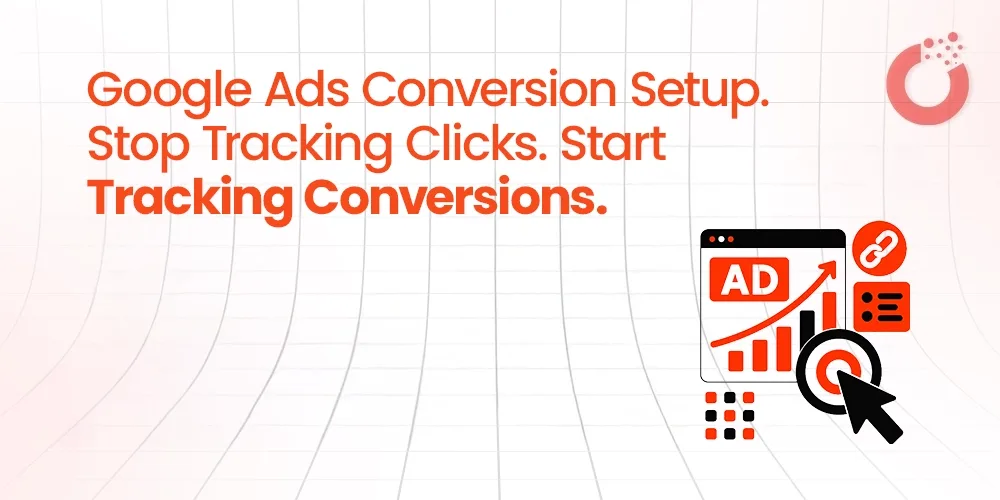
Pixel & Conversion Tracking
A pixel is a tiny piece of code that sits on a website. When someone visits a page, it records that visit. When they complete a purchase or fill a form, it records that conversion and tells the ad platform which ad led to it.
Without the pixel, you’re flying blind. You know how much you spent but not what it achieved. With the pixel set up correctly, you can attribute every sale or lead back to a specific ad, audience, or campaign. This is why conversion tracking is considered a foundational technical skill in performance marketing.
Audience Targeting
On Meta (Facebook and Instagram), you don’t wait for people to search. You go to them. You define who you want to reach, based on location, age, gender, interests, online behaviour, or even whether they’ve visited your website before.
For example, a performance marketer promoting Zeon Academy in Kochi might target people aged 19–30 in Ernakulam district who follow digital marketing pages, have shown interest in online courses, or visited the Zeon website in the past 30 days. That level of precision is powerful, and knowing how to use it well is a skill.
Let’s make this concrete. Here’s what the job actually looks like day-to-day, not in abstract terms but in actual tasks:
- Setting up a campaign — choosing the objective (traffic, leads, conversions), defining the audience, writing the ad copy, selecting creatives, setting the budget and bid strategy
- Monitoring performance — checking how campaigns are performing every day or every few days. Are they spending the budget? Is the CPL within target? Is CTR dropping?
- A/B testing — running two versions of an ad with different headlines, images, or audiences to see which performs better, then pausing the loser and scaling the winner
- Audience research — looking at which segments of people are converting best, and using that insight to refine targeting
- Landing page feedback — if conversions are low despite good ad performance, it’s often a landing page problem. The performance marketer flags this and suggests improvements
- Reporting — putting together weekly or monthly reports that show what was spent, what was earned, what the ROAS was, and what’s being done to improve it
Notice that this isn’t a purely creative job, but it’s not purely analytical either. It’s both. You need to write compelling copy, understand data, make decisions under budget pressure, and communicate results clearly. That combination of skills is rare — and that’s why it commands a higher salary.
Here’s something to understand about how businesses think: they will always spend more money on things that clearly make them money.
When a business hires a social media manager, they’re investing in brand presence, community, and long-term credibility. These things matter, but they’re hard to measure directly in revenue. The ROI is real but indirect and slow.
When a business hires a performance marketer, they’re essentially hiring someone to run a machine that turns ₹1 into ₹3 or ₹5. If that machine is working, they want to pour more money into it. If it’s not working, they want to know why and fix it.
That directness is what makes the role valuable. A performance marketer who can consistently deliver a 4x ROAS is not seen as a cost to the business. They’re seen as an asset. And assets get paid accordingly.
A performance marketer who can show documented campaign results is negotiating from a completely different position than someone with only a certificate.
In Kerala specifically, the combination of growing local business investment in digital and the increasing availability of GCC-remote roles for Kerala-based talent has pushed demand for performance marketers significantly higher in 2025–26. Agencies in Kochi are struggling to find people who can actually run and optimise campaigns, not just talk about how they work.
This is the practical question, so here’s a practical answer. To be job-ready as a performance marketer, you need to understand and practise the following:
Google Ads
- How the Search Network works — keywords, match types, Quality Score
- How to set up a campaign from scratch — campaign structure, ad groups, ad copy
- Bidding strategies — manual CPC vs Target CPA vs Maximise Conversions
- How to read and act on performance data in Google Ads Manager
- Conversion tracking via Google Tag Manager
Meta Ads (Facebook & Instagram)
- Campaign objectives — awareness vs traffic vs leads vs conversions
- Audience building — interest targeting, custom audiences, lookalike audiences
- Ad formats — single image, carousel, video, lead gen forms
- Meta Pixel setup and event tracking
- Reading Ads Manager reports and making optimisation decisions
Analytics & reporting
- Google Analytics 4 — understanding traffic sources, user behaviour, conversion events
- Attribution — understanding how to credit which channel drove a conversion
- Basic data interpretation — reading a campaign report and knowing what to do next
You don’t need to be a data scientist. You don’t need to code. What you need is the ability to set up campaigns correctly, read what the data is telling you, and make smart decisions to improve results. That’s learnable. It takes practice on real campaigns, not just watching tutorials.
Where does Zeon Academy come in?
Here’s the honest version of this conversation. Performance marketing is a practical skill. You can’t learn it by watching YouTube videos and calling yourself ready. You learn it by setting up real campaigns, spending real (or simulated) budgets, making mistakes with low stakes, and understanding why things worked or didn’t.
Most digital marketing courses in Kerala cover performance marketing as one module in a broad overview. They show you what a campaign looks like. They walk you through the interface. But they don’t give you the time and live practice needed to actually become competent.
At Zeon Academy, performance marketing — specifically Google Ads and Meta Ads — is a core part of the curriculum, not an afterthought. Students work on real campaign structures, practise audience building, run mock campaigns with live platforms, and build the kind of portfolio that gives you something to show in an interview.
We’re also the training arm of Web India Solutions, a digital marketing agency with 18 years of experience in the Kerala market. That means what we teach is not based on what was relevant in 2021. It’s based on what Kochi agencies are actually using and hiring for right now.
If you’ve been looking for the best digital marketing course in Kerala that takes performance marketing seriously — not as a checkbox but as a career pathway — come and see what our curriculum actually looks like.
The short version, if you’ve been skimming
Performance marketing means running paid ad campaigns on Google and Meta, where results are measured in real numbers — ROAS, CPL, CTR, conversions.
It pays more than general digital marketing because it directly influences business revenue in a way that’s immediately visible and measurable.
To become a performance marketer, you need practical training on Google Ads and Meta Ads, an understanding of conversion tracking and analytics, and a portfolio that shows you’ve actually done it.
In Kerala’s 2026 job market, this is the skill with the clearest career path and the strongest salary trajectory at entry level. If you’re choosing where to put your learning time, this is worth serious consideration.